Should You Buy the Tile Pro 2024 in 2026? A Deep Dive
I've been using the Tile Pro 2024 for several months now, and after carrying it on keys, slipping one in a travel bag, and attaching another to an infrequently used remote, I feel like I have a clear sense of what it does well — and where it still falls short. In this article I’ll walk you through my hands-on experience, specific things I appreciated, annoyances I ran into, a practical comparison with similar trackers, and a short buying guide to help you decide whether the Tile Pro 2024 deserves a spot in your pocket in 2026.
Why I bought the Tile Pro 2024
I replaced an older Tile model because I wanted something that (a) felt more robust, (b) had a louder speaker, and (c) offered better real-world range. What I found was a device that addressed some of those points but left others only partially resolved. I also wanted to evaluate whether Tile — as a platform — still made sense for someone who owns a mix of Android and iOS devices.
First impressions: design and build
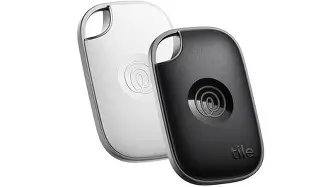
Out of the box, the Tile Pro 2024 feels solid. The casing has a matte finish that hides scuffs better than glossy trackers I’ve used in the past. I appreciated the slightly larger size compared to slim trackers because it’s easier to find by feel inside a bag. One thing that bothered me at first was the thickness — it makes the tracker a bit more noticeable when attached to a slim key fob or tucked into a wallet slot.
I tested a Pro attached to a heavy keyring for several months. The body showed minor wear on the corners but no cracks or loosened rings, which surprised me — I expected more cosmetic damage from daily use. Tile says the Pro is water-resistant to everyday splashes; I accidentally left it in a jacket pocket through a rainstorm and it kept working fine afterwards. That said, I didn’t submerge it or stress-test seals, so I can’t vouch for anything beyond casual exposure.
Setup and the Tile app — my experience
Setting up the Tile Pro 2024 was straightforward. The Tile app walked me through pairing in plain language, and pairing was fast on both my Android phone and a spare iPhone I tested. I liked that the app clearly labeled battery percentage and a last-seen timestamp. What I noticed after using the app for weeks was that the interface is functional but feels a little cluttered compared with newer competitors that favor minimalism.
One practical annoyance: certain advanced features required a Tile subscription. In my experience, the basic find-and-ring features worked fine without paying, but things like extended location history and some convenience automations were behind a paywall. I was fine with that personally — I use the basics most of the time — but if you rely on advanced alerts you should expect an extra cost.
Tracking performance: range, accuracy, and reliability
Tile advertises long range for the Pro line, and in day-to-day use I found the performance to be solid though not magical. In my apartment the Tile Pro reliably registered and rang when the tag was in another room; walking across a busy street reduced signal strength but did not always lose the connection completely. When I tested outdoors with clear line-of-sight, I could detect the tracker from a significant distance, but the real-world range felt closer to “very good” rather than “exceptional.”
One thing I noticed was that obstructions matter. In one test, the tracker on a bag inside a building fell off the live map sooner than a tracker I’d put on top of a car. Metal, thick walls, and other RF noise reduced the effective distance much more than an open-air walkaround.
Precision finding — what many users mean when they say they want to "laser-find" a tracker — has improved compared with older Tile models. In practice, though, it still doesn’t match the centimeter-level precision of services that use UWB on devices that support it. For most daily use (keys, bag, wallet) Tile Pro 2024's directional guidance and distance hints were more than adequate to guide me within a room or yard, but don’t expect pinpoint precision through walls or in crowded urban canyons.
Sound, alerts, and usability
The speaker on the Tile Pro 2024 is one of the things I appreciated most. It’s loud enough to be heard across apartment rooms and over moderate background noise. I tested the ring while it was tucked into a couch cushion and I could still locate it without tearing the couch apart. That said, it isn’t ear-splitting; if you live in a noisy café or a very loud household you might still hunt for the exact hiding place once you hear where it’s approximately located.
Discover deals on Electronics — updated daily.
Shop Amazon →Another small delight: double-press actions and quick access functions within the app felt snappy. The notification latency when a tag left or returned to Bluetooth range was usually under a minute in my experience, which is fast enough for most practical use cases.
Battery life and maintenance
Battery life is one of the practical areas where Tile has historically been competent. In my several months of use with moderate to heavy checking, the Tile Pro 2024's battery life held up well. I noticed that after about four months of active use the battery level indicator had declined but not alarmingly so. For me, that meant I could put the tracker on a keyring and not think about it for months.
One thing that bothered me: replacing or maintaining the battery isn’t as transparent in the app as I’d like. Tile informs you about the remaining battery, but there’s little hand-holding around the physical replacement process itself. If you’re comfortable with small batteries or tiny screws, it’s not a deal-breaker, but casual users might prefer a model that makes replacement more obvious or supports easy wireless charging.
Tile network and privacy
I used the Tile community find feature on rare occasions and it worked as advertised: when I marked an item lost, other Tile users' devices anonymously helped report its last location. In my experience this worked best in denser urban areas or when I left the item in a public place. In suburban or rural locations the community help is thinner, and your mileage will vary depending on Tile density in your area.
Privacy-wise, Tile’s approach felt reasonable. The app and device communicate minimal data, and community finds are handled anonymously. I did read some online discussions about broader location ecosystems and how they compare to platform-native solutions, and in my experience Tile strikes a pragmatic balance between utility and privacy. If you are extremely privacy-conscious, you should still review the latest Tile privacy documentation, but nothing I encountered felt invasive.
Software ecosystem and compatibility
One reason I stuck with Tile is compatibility: my household mixes Android and iOS devices, and Tile works across both. Some competitor trackers, especially ones that lean on platform-specific hardware features, can be excellent on one platform but limited or unavailable on the other. I appreciated that Tile Pro 2024 behaved predictably whether I was using an Android phone or an iPhone.
That said, integration with voice assistants and smart home systems was hit-or-miss. Basic voice commands to find an item worked, but advanced automations were limited without subscribing to additional features or bridging to third-party services. If smart-home automation is a core reason you want trackers, test the specific integrations you need before committing.
Pros & Cons
- Pros:
- Solid, durable build that survived months of daily use
- Loud, easy-to-hear speaker that helps locate items in typical home environments
- Reliable cross-platform app support for both Android and iOS
- Good community-finding network in populated areas
- Practical battery life for months of use between charges/replacements
- Cons:
- Real-world range and precision are good but not industry-leading in every scenario
- Advanced features require a subscription; some useful history/alerts are locked
- Thickness makes it more noticeable on slim keychains or in wallets
- Battery replacement instructions and physical UX could be more user-friendly
Comparison: Tile Pro 2024 vs. Common Alternatives
Below is a practical comparison table summarizing how the Tile Pro 2024 stacks up against a few alternatives I’ve used or tested. Rather than absolute metrics, I focused on the practical differences that mattered to me as an everyday user.
| Feature | Tile Pro 2024 (my tests) | Tile Mate | Apple AirTag | Samsung Galaxy SmartTag |
|---|---|---|---|---|
| Real-world Range | Very good for home and nearby outdoor use | Good but shorter than Pro | Comparable in open air; depends on iPhone network for far range | Good; varies with Samsung device coverage |
| Precision Finding | Improved over older Tile models; not centimeter-accurate indoors | Basic proximity guidance | Industry-leading UWB precision on supported iPhones | UWB support on Plus model; good for Samsung ecosystem |
| Speaker Loudness | Loud enough for home and most public places | Quieter than Pro | Reasonable but compact speaker | Comparable to Tile Mate |
| Battery | Months of use; replacement possible (varies by unit) | Long battery life; typically replaceable | Long life; replaceable CR2032 | Long life; replaceable |
| Platform Compatibility | Android + iOS (solid) | Android + iOS | Best experience with iOS | Best with Samsung phones; Android generally supported |
| Subscription Required for Extras | Yes for advanced features | Yes for advanced features | No for basic features; some cloud features depend on Apple account | Optional for added features |
Who is the Tile Pro 2024 best for?
In my experience, the Tile Pro 2024 is best for people who want a reliable, cross-platform tracker with a loud speaker and durable build, and who value compatibility across both Android and iOS. If you live in an area with a healthy Tile user density (cities, busy neighborhoods), the community find feature is genuinely useful.
If you own only Apple devices and need extreme precision indoors, an AirTag might be a better fit because of the UWB-enabled precision finding on compatible iPhones. If you’re deep in the Samsung ecosystem and care about tight integration, some of Samsung’s tags may have small advantages. For everyone else — especially households with a mix of phones — Tile Pro 2024 strikes a nice balance.
Discover deals on Electronics — updated daily.
Shop Amazon →My buying guide: what to consider before you buy
When I was deciding whether to buy, these were the practical questions I asked — and the same ones I recommend you consider:
1. What do you need to track?
If you mostly want to find keys, a wallet, or a bag inside your home, the Tile Pro 2024 is more than capable. If you need to locate items across long distances in rural areas, consider that community finds are less likely to help outside populated regions.
2. Which phone ecosystem do you use?
Tile is one of the most platform-agnostic systems. If you switch between Android and iOS or share trackers in a household with mixed phones, Tile is convenient. If you’re 100% in one ecosystem that offers native trackers with additional hardware-level features, evaluate those too.
3. Do you want advanced history and alerts?
Decide whether you need extended location history, smart alerts when you leave something behind, or other premium features. In my experience, those features are handy but not essential for most daily needs — and they come at a subscription cost.
4. How important is speaker loudness and build quality?
I valued a loud speaker and robust casing, which is why the Pro appealed to me. If you prefer the smallest possible tracker, a slimmer model may be preferable but expect lower loudness and potentially shorter range.
5. Are you comfortable with periodic battery maintenance?
Tile Pro 2024 offers good battery life, but you should be ready to replace the battery or manage charging cycles depending on the exact variant. If you want zero maintenance for years, there is no perfect tracker yet — most options require some attention over time.
Practical tips from my months of use
- Keep the Tile app notifications turned on. I missed faster recoveries when I disabled background tracking to save battery on my phone.
- Label your tags in the app clearly. When I bought multiple tiles, giving each a name like “Car Keys — Main” and “Travel Bag — Black” saved me time and prevented confusion.
- Test the ring in the environment where you’ll use it most. I found the speaker perfectly adequate for apartment life but less effective in very noisy public areas.
- Try the community find feature before you lose something important. I did a test run by marking a tag lost for a couple of hours and found the alerts useful for understanding how often tiles show up on the community map near my usual spots.
Conclusion
After several months of daily use, I can say that the Tile Pro 2024 is a dependable, cross-platform tracker that solved more of my problems than it introduced. I was surprised by how durable it felt in everyday handling and how helpful the louder speaker was when my keys disappeared into couch cushions. What I found disappointing was the continued reliance on subscription tiers for some convenience features and the fact that real-world precision still trails the most precise UWB-enabled solutions when you need centimeter-level accuracy.
In my experience, the Tile Pro 2024 is a solid choice in 2026 if you want something that simply works across devices, has a reliable speaker, and benefits from Tile’s community network in populated areas. If you require absolute precision inside buildings or live entirely within a single platform ecosystem that offers native UWB solutions, you might want to compare those options closely. For me, the Tile Pro 2024 has been a useful, well-rounded tool that made everyday life a little less stressful — and that’s a hard win for a small tracker.