Biggest Manfrotto One Buying Mistakes (And How to Avoid Them)
Introduction
The Manfrotto One line is often recommended to hobbyists and travellers who want a compact, user-friendly support system for mirrorless cameras, compact DSLRs, and smartphones. It promises a blend of portability, reasonable stability, and intuitive controls — features that appeal to a broad audience. Yet many buyers make predictable mistakes when selecting the Manfrotto One or any similarly marketed tripod, and those mistakes lead to frustration: gear that feels unstable on a windy cliff, mounts that are incompatible with legacy plates, or a purchase that doesn’t reflect the buyer’s actual shooting style.
This article examines the Manfrotto One through a practical lens: what it is best at, where it commonly falls short for particular users, and the concrete steps buyers can take to avoid the most frequent pitfalls. The goal is to help buyers make an informed decision that aligns with their real-world use cases — travel, landscape, timelapse, handoff vlogging, and lightweight studio work.
Product review and analysis
Design and build quality
The Manfrotto One is positioned as an accessible, travel-oriented support. The construction emphasizes lightweight materials and compact folding dimensions so the tripod can live in a carry-on or a daypack. Build quality typically prioritizes simplicity: integrated heads, intuitive leg locks, and easy-to-use controls instead of a profusion of knobs and adjustment points.
For many casual photographers and vloggers, that combination works well — it makes setup fast and reduces friction during shoots. However, buyers who expect the sort of precision adjustments and modularity found on higher-tier systems may be disappointed. The trade-off between simplicity and serviceability is central to understanding whether the Manfrotto One is the right fit.
Head and mounting system
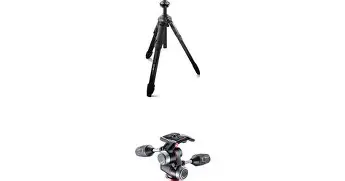
Manfrotto’s consumer tripods often use integrated heads with quick-release mechanisms designed for fast mounting. For the One series, the head is intended to be forgiving and easy to manipulate; it is suitable for still photography and lightweight video work. The head design favors straightforward panning and tilt for casual motion and framing.
One important practical note: quick-release plate standards vary. Some photographers come to the Manfrotto One with existing plates, L-brackets, or Arca-style accessories expecting plug-and-play compatibility. In practice, buyers should verify whether the tripod’s plate matches their existing equipment or whether an adapter will be needed.
Performance in the field
In calm conditions with lightweight mirrorless bodies and short-to-medium focal length lenses, the Manfrotto One performs reliably: sharp images, steady timelapses, and fluid smartphone captures. Problems typically appear when the system is pushed beyond its design envelope — heavy telephotos, strong gusting wind, or dynamic video work requiring smooth, repeatable pans and tilts.
For landscape and timelapse photographers who prioritize stability over absolute portability, the Manfrotto One can work if deployed carefully — low center column use, retracting the legs for a lower stance, and adding an anchor weight where possible. But for wildlife photographers or anyone regularly using long lenses, the One’s modest payload margin often becomes the limiting factor.
Portability and travel friendliness
Portability is a major selling point. The One folds compactly and is lighter than professional-grade tripods, making it an attractive companion for travel photographers and content creators who move quickly. This portability advantage has real-world implications: people are more likely to carry a tripod that fits comfortably in or on a bag, which in turn increases the number of stabilized shots captured on a trip.
Even so, portability sometimes tempts buyers to ignore other needs. Choosing the lightest option without accounting for the photographic kit or the environmental conditions can turn a convenience purchase into an operational limitation on location.
Compatibility and expandability
The Manfrotto One is designed for a plug-and-play experience, but that design comes with limitations. Modular upgrades such as replacing the head with a heavier video head, attaching third-party ball heads, or mounting large gimbals may be restricted by plate incompatibility, limited maximum load, or integrated column design.
Buyers who plan to evolve their gear over time should check whether the One accommodates third-party components, or whether a more modular Manfrotto model (e.g., Befree, 190, or other lines) would better support future changes.
Shop the latest Cameras & Photography picks on Amazon.
Shop Amazon →Real-world use cases and what buyers typically care about
Travel and street photographers
Needs: compactness, fast setup, low weight, and decent stability for long exposures.
Common mistake: prioritizing size above load capacity. Many travel shooters choose the smallest option and later discover their heavier mirrorless kit or extra accessories make the setup top-heavy. For travel, the Manfrotto One works well when matched to a light camera and short prime lens; if lenses or rigs get larger, a stiffer tripod is necessary.
Landscape and timelapse shooters
Needs: rock-solid stability for long exposures, repeatable framing for timelapse, low vibration.
Common mistake: relying on a compact tripod for long-exposure work without considering the environment. The Manfrotto One can be serviceable if the center column is not extended and a weight is applied, but many buyers underestimate how much stability matters for 30–60 second exposures or for multi-hour timelapses.
Vloggers and smartphone content creators
Needs: quick mounting, smartphone clamp compatibility, smooth panning for handheld tripod use.
Common mistake: assuming smartphone adapters are included or that the tripod’s head will behave smoothly for video. Buyers often neglect to test the head’s friction control or whether the quick-release plate interferes with certain smartphone cases or gimbal mounts.
Studio portrait shooters and hybrid users
Needs: sturdiness, adjustable height, compatibility with various heads and accessories.
Common mistake: buying a travel-friendly tripod for studio use where stability and accessory compatibility matter more than size. The Manfrotto One can be limiting in a studio context where heavier flash modifiers, triggers, or boom arms are common.
Pros & Cons
- Pros
- Compact and lightweight — easy to carry on trips and commutes.
- User-friendly controls — quick set up and simple operation for beginners.
- Good value for casual photography and smartphone content capture.
- Fast mounting and basic panning/tilt features suitable for everyday shooting.
- Cons
- Limited payload margin for long lenses or heavier mirrorless/DSLR bodies.
- Less modular — head and plate compatibility can restrict accessory upgrades.
- Stability can suffer in wind or on uneven terrain compared with pro-grade tripods.
- Not optimized for heavy-duty video work or large gimbals.
Comparison table (contextual)
The following table compares the Manfrotto One conceptually with other commonly chosen Manfrotto models and an average lightweight carbon alternative. The purpose is to help buyers place the One in context rather than to list exact specifications.
| Model | Best for | Stability | Head type | Portability | Typical buyer concern |
|---|---|---|---|---|---|
| Manfrotto One | Traveling mirrorless users, smartphone content | Moderate — suitable for light kits | Integrated consumer head / quick-release | High — compact and light | Will it hold my heavier lenses? |
| Manfrotto Befree | Travel and amateur landscape photographers | Good — better payload and rigidity | Interchangeable head options (ball, fluid) | Moderate — still travel-friendly | Is it stable enough for long exposures? |
| Manfrotto PIXI | Desk-top, vlogging, tabletop product shots | Low to moderate — for lightweight setups | Small ball head | Very high — pocketable | Will it survive outdoor use? |
| Lightweight carbon alternative | Serious travel photographers seeking low weight | Varies — higher-end carbon is stiffer | Often Arca-compatible ball head | High — ultra-light designs | Is the trade-off between stiffness and weight acceptable? |
Buying guide: How to avoid the biggest mistakes
1. Match tripod payload to real-world gear, not just camera body
One of the most common errors is calculating compatibility using camera body weight alone. A practical assessment includes the camera body, the heaviest lens that will be used regularly, a battery grip (if applicable), filters, and possible ball heads or accessories. Photographers are advised to add at least 30–50% margin to the combined weight to account for wind, dynamic motion, and the reduced damping of lighter tripods. If the Manfrotto One’s recommended payload feels close to the rig’s weight, step up to a stiffer model.
2. Understand head type and control needs
Buyers frequently buy on tripod weight and ignore head behavior. For stills and timelapse, a secure ball head is often ideal; for low-angle product work or video, a pan-and-tilt or fluid head may be needed. The Manfrotto One’s integrated head is convenient, but if the buyer anticipates a shift to heavier heads or professional video, selecting a tripod with a removable head and standard compatibility is wiser.
3. Verify quick-release plate compatibility before purchase
Many photographers discover an incompatibility between existing plates (or L-brackets) and a new tripod head after purchase. Confirm whether the tripod uses a proprietary plate system or a universal/Arca-type interface. If the Manfrotto One uses a proprietary plate and the buyer has many Arca-style accessories, either plan to buy an adapter or choose a tripod that natively accepts the common plate system.
Looking for the best Cameras & Photography deals on Amazon?
Shop Amazon →4. Factor in the environment: stability vs. portability
Decide where the tripod will be used most. For beach, cliff, or field work where wind is common, stability should outrank portability. If most shooting happens in museums, urban streets, or indoor spaces, the Manfrotto One’s portability becomes a stronger advantage. When in doubt, consider the compromise: a slightly heavier travel tripod that offers a higher payload and a lower center of gravity.
5. Test leg locks and ruggedness
Leg lock type affects speed and longevity. Twist locks are slim and take less space; flip locks can be faster to operate when wearing gloves. Buyers should handle the tripod in person when possible, testing how quickly legs extend and whether the locks feel secure. Inspect for any play in joints and test how the tripod performs while raising and lowering the center column — subtle wobble can become problematic in real use.
6. Avoid buying purely on aesthetics or brand name
Brand reputation helps, but it does not substitute for a fit-for-purpose match. Some buyers pick the Manfrotto One because of its design or because it shares a brand with professional gear; they then find the product doesn’t meet practical needs for weight or accessory compatibility. Prioritize function: test with real equipment and simulated use cases (e.g., long exposure, shaky surfaces, low-angle shots).
7. Consider future upgrades and modularity
Consider how the tripod will fit into a longer-term gear roadmap. If future upgrades include heavier lenses, gimbals, or specialized heads, choose a tripod with a removable head and a strong connector. A compact tripod that cannot accept a beefier head will become an early bottleneck for evolving photographers.
8. Read user experiences for the same use case
User reviews can be misleading when aggregated across many use cases. Seek out feedback specific to the buyer’s intended use — travel vlogging, landscape, studio portraits. Real-world reports on load handling, plate compatibility, and stability in wind will be far more instructive than general star ratings.
9. Mind accessories: weight hook, ground spikes, and smartphone mounts
Small features make a big difference. A weight hook for adding ballast during windy timelapses, removable rubber foot covers for ground grip, or an included/adaptable smartphone clamp can be decisive for particular workflows. Verify which accessories are included or can be added later without compromising compatibility.
10. Warranty and service
Tripods are durable but not indestructible. Verify warranty coverage and the availability of service or replacement parts in the region. This becomes especially important for photographers who travel internationally and rely on consistent support for professional work.
Practical checklist before buying a Manfrotto One
- Confirm the total weight of camera + heaviest lens + accessories and compare it to a recommended payload with a safety margin.
- Test or confirm quick-release plate type and whether existing plates/L-brackets are compatible.
- Decide whether the integrated head meets video or panning needs; if not, ensure the tripod accepts a replaceable head.
- Consider how often the tripod will be carried versus used on stable ground; prioritize portability or rigidity accordingly.
- Check for features like a weight hook, leg-lock type, rubber spikes, and smartphone adapter compatibility.
- Read use-case-specific reviews (e.g., travel timelapse, smartphone vlogging) rather than aggregate ratings.
Conclusion
The Manfrotto One is a compelling option for photographers and content creators who need an approachable, portable tripod for everyday shooting with mirrorless bodies and smartphones. Its strengths — ease of use, compact profile, and friendly controls — make it a good match for travel, quick-street setups, and casual timelapses.
However, several predictable mistakes can diminish satisfaction: underestimating payload needs, overlooking plate and head compatibility, and prioritizing portability when stability matters most. The best buyers will match the tripod to their real shooting conditions, test it with their actual kit, and consider modest margins for future growth.
By focusing on the practical trade-offs described above and following the checklist, buyers can avoid the most common pitfalls and select a support system that truly enhances their photography rather than constrains it.